The Avoidance Cycle
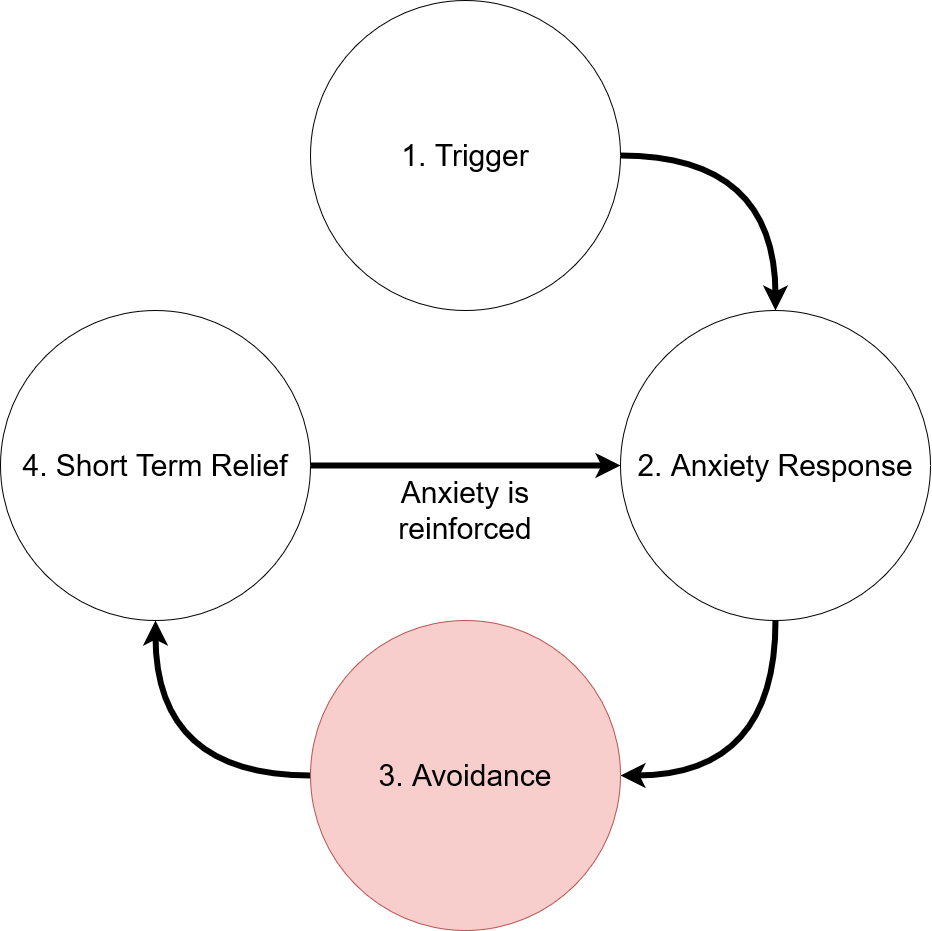
Anxiety is a natural process meant to help us. Avoidance is a natural response in order to relieve discomfort. The avoidance cycle is when anxiety and avoidance create a negative feedback loop that throws this process out of balance. Anxiety leads to avoidance, which reinforces to our brain the need for anxiety, and the cycle repeats. This leads to contamination OCD, fear that disrupts our lives.
Let's break down the cycle:
1The Trigger: A trigger is something we associate with discomfort. A trigger can be things we don't like, or it might even be things we want to do but can't, like going certain places or eating certain things.
2The Anxiety Response: Our brains associate a trigger with discomfort - sweaty palms, fast heart rate, panic thoughts, etc.
3Avoidance: When anxiety and discomfort become too much, we avoid. We leave the room, cancel plans, don't eat, chew gum, etc.
4Short Term Relief - Anxiety Reinforced: Avoidance might bring immediate relief, but, avoidance creates a false connection in our brain. Our brain says 'Hey, that anxiety saved me! Thank goodness I had that anxiety, I better do that again next time'.
Break The Avoidance Cycle
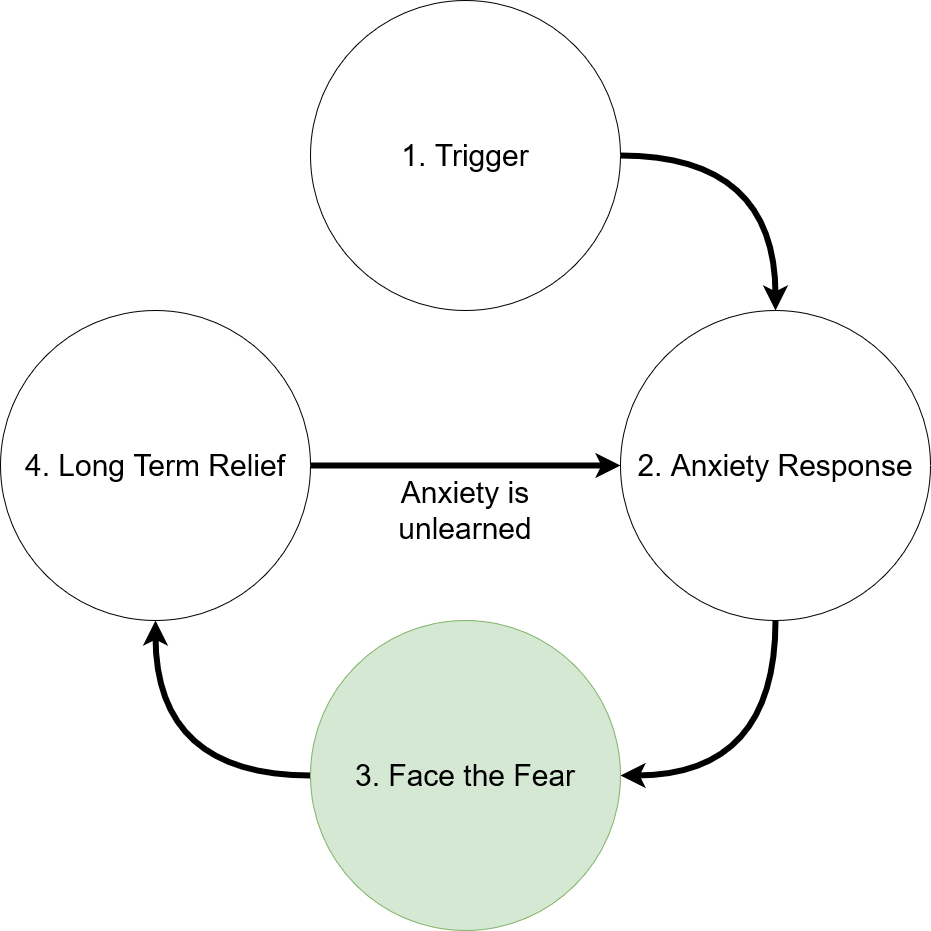
How do we break the cycle of avoidance and anxiety?
Where do we have control?
1The Trigger: Notice how the trigger is not a part of the cycle, it just starts it. Avoiding triggers does not lead to recovery. Triggers are not the problem, and could even be things we want to enjoy like certain activities and foods.
2The Anxiety Response: You may be able to control your anxiety response through therapy techniques and medication, that is okay, however, our goal is to eliminate the anxiety response, not control it. Anxiety is a symptom and causes discomfort, but it is not the problem.
3Our Response to Discomfort: This is the only step in our control. We know from the avoidance cycle that avoidance does not lead to recovery, so what can we do? We can face the discomfort.
4Long Term Relief - Anxiety Reduced: By facing your fear your brain will learn 'hey, everything is okay. I guess that trigger is not so bad' and the anxiety response will be unlearned. The good news is the brain can be re-wired quickly and in small steps.
We know facing fears is not easy. MyOCD provides small incremental steps so you can move at your own pace.
Exposure Is Like Practice
Doing exposure in a controlled setting is like practicing an instrument before playing a concert. How can we expect to do well in the real world without practicing before?
MyOCD is your tool to practice discomfort and break the avoidance cycle. You control the pace and content you see, and MyOCD helps you conquer your contamination OCD in small steps as your brain unlearns the contamination OCD response.